
The Nauticat 33 is the boat that started it all. Built by Siltala Yachts in Finland from 1967 to 1996, it became one of the most successful and beloved motorsailers ever produced. With roughly 1,160 hulls launched, the Nauticat 33 is still regarded by many as the purest expression of the classic Finnish pilothouse concept.
It is the smaller sister of our own Nauticat 38, and many of the qualities we appreciate on Maja already exist in a more compact and economical package on the 33.
Nauticat 33 Specifications
| Specification | Value |
|---|---|
| Designer | W. Aarnipalo |
| Builder | Siltala Yachts, Finland |
| Production years | 1967 – 1996 |
| Number built | Approx. 1,160 |
| LOA | 10.11 m (33.17 ft) |
| LWL | 8.59 m (28.17 ft) |
| Beam | 3.25 m (10.67 ft) |
| Draft | 1.25 – 1.55 m (depending on keel) |
| Displacement | Approx. 7,824 kg (17,250 lbs) |
| Ballast | Approx. 2,336 kg |
| Rig | Masthead ketch |
| Sail area | Approx. 44–48 m² |
| Typical engine | Ford Lehman diesel, ~80 hp |
| Hull type | Long keel (early) / fin + skeg (later) |
The Nauticat 33 was designed as a heavy-displacement, all-weather motorsailer. It prioritises comfort, protection and seaworthiness over pure sailing performance — exactly the philosophy that later continued in the Nauticat 38.
History of the Nauticat 33
In the mid-1960s local Finnish sailors asked Siltala Yachts to build a solid 10-metre motorsailer with a proper wheelhouse that could handle the rough conditions of the Baltic. The result was the Nauticat 33, designed by engineer W. Aarnipalo.
It quickly became a bestseller. Early boats (often called Mk I) had a wooden wheelhouse and a shallow long keel. From the late 1970s the design evolved: a raised aft deck became common, the wheelhouse switched to GRP, and a deeper keel with skeg-hung rudder was introduced. These later boats are generally preferred today because of lower maintenance and better handling.
In 1997 the model was updated and continued as the Nauticat 331. The original Nauticat 33 remains the boat that defined the entire brand.
Full Walkthrough of a Nauticat 33
Here is a detailed tour of a classic 1980 Nauticat 33 (named Frøy) that we filmed while she was for sale through Skippern Yachts:
In the video you will see the layout, the engine room with the well-proven Ford Lehman, the pilothouse, the aft cabin, the galley and the overall condition of a typical well-kept example.
How a Nauticat Motorsailer Behaves
Although the following videos were filmed on our Nauticat 38, they give a very good impression of how these classic Finnish motorsailers perform under sail and in real conditions. The design philosophy is the same on the Nauticat 33.
These videos help explain why so many owners (including us) choose a Nauticat for comfortable, all-weather cruising and liveaboard life rather than pure performance.
Layout and Liveaboard Potential
Despite being “only” 33 feet, the Nauticat 33 feels surprisingly spacious. The design uses the beam well and gives good headroom in most areas. Typical layout includes:
- Forward cabin (V-berth)
- Saloon with dinette and galley
- Protected pilothouse with inside helm
- Aft cabin with its own privacy
Many owners have used the Nauticat 33 as a full-time liveaboard. The pilothouse makes a huge difference in colder climates or bad weather, and the boat has enough tank capacity and storage for extended cruising.
If you are considering a smaller, more affordable entry into the Nauticat world while still wanting real liveaboard comfort, the 33 is worth serious attention.
Nauticat 33 vs Nauticat 38
We live aboard a Nauticat 38, so the comparison comes naturally:
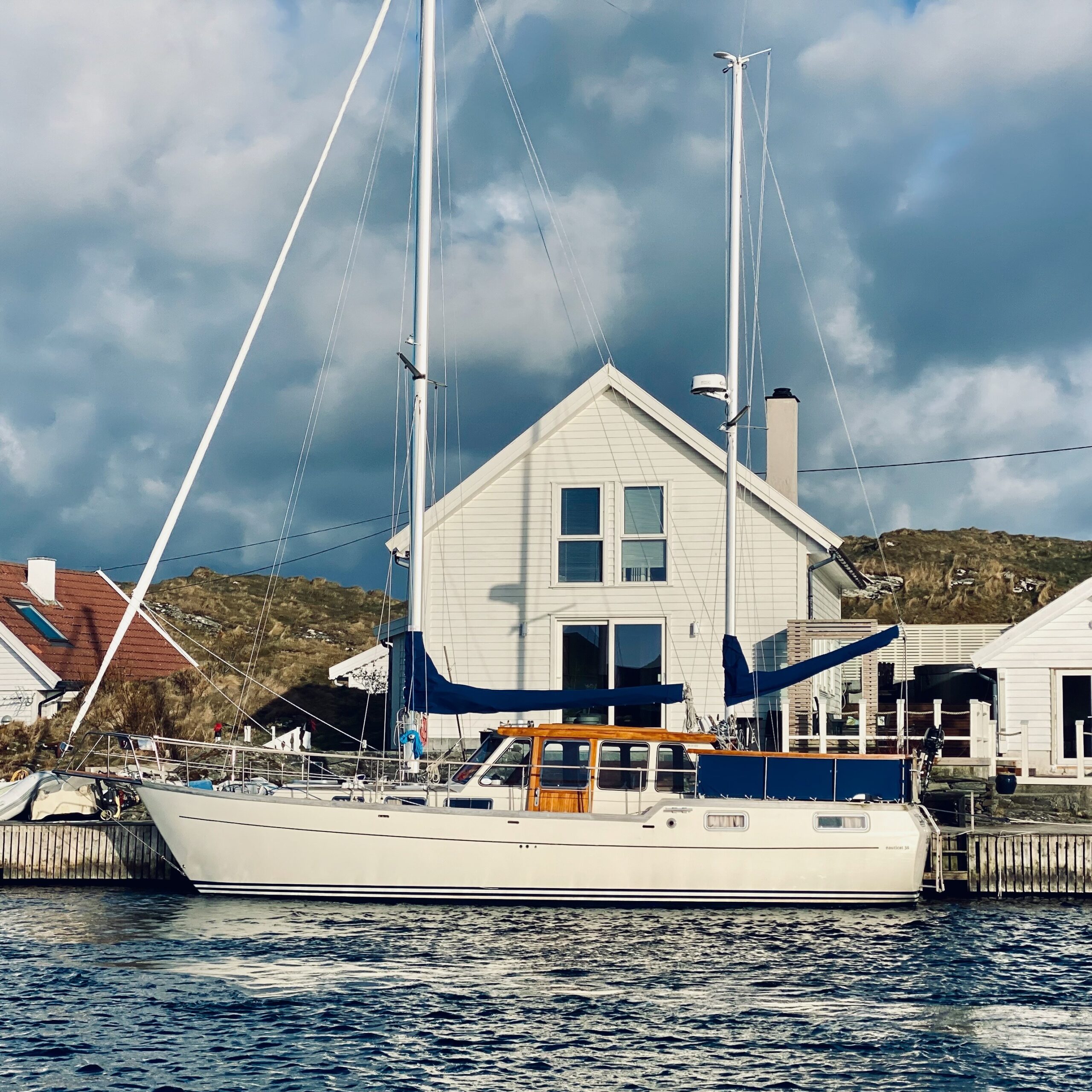
- The 33 is lighter, shorter and cheaper to buy, berth and maintain
- The 38 offers more volume, better motion in a seaway and more room for systems and long-term living
- Both share the same solid Finnish construction philosophy and the same protected pilothouse concept
Many people start with a Nauticat 33 and later move up to a 38 (or similar). Others find the 33 is exactly the right size for a couple.
Is the Nauticat 33 a Good Boat to Buy Today?
Yes — if you buy a well-maintained example and understand what the boat is (and is not).
Strengths:
- Extremely solid construction
- Excellent protection in the pilothouse
- Good liveaboard volume for the length
- Proven long-distance capability
- Relatively affordable on the second-hand market
Points to check carefully:
- Condition of the teak deck (if still original)
- Wooden wheelhouse on early boats (rot risk)
- Engine hours and maintenance history (Ford Lehman is robust when looked after)
- Osmosis and structural condition of older hulls
If you are looking to buy or sell a Nauticat 33, we can help through our brokerage services. See our pages on buying a boat and selling your boat.